
Beware of “fake injectors”
Learn how to recognize fake injectors, avoid serious risks, and choose a qualified doctor for your cosmetic injections.


Macrolane hyaluronic acid is banned in France for breast augmentation due to inflammatory risks and screening difficulties.
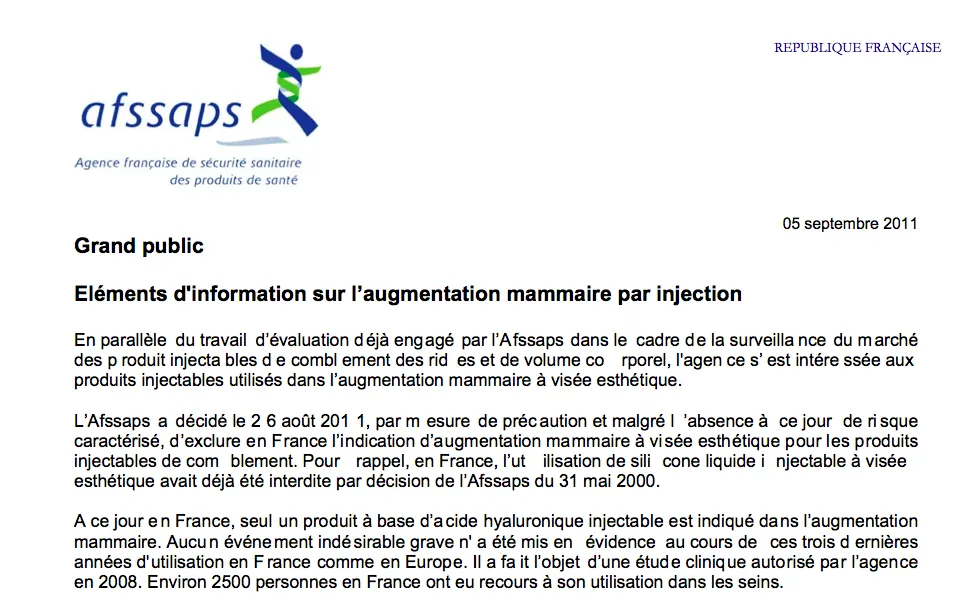
Heralded over the past three years as a breakthrough in cosmetic breast enhancement, the use of Macrolane®, a highly cross-linked hyaluronic acid gel, has now been officially banned by the French Health Products Safety Agency (AFSSAPS) for use in breast augmentation.
The agency cited several potential risks associated with the use of Macrolane for breast enlargement:
This decision effectively puts an end to a media frenzy orchestrated by Q-Med Laboratories, which marketed Macrolane as a groundbreaking alternative to traditional silicone breast implants.
From the outset, I believed this product was a step backward in terms of safety. Unlike silicone implants, which are housed within a sealed shell, Macrolane lacks structural containment, leading to unpredictable results and safety concerns.For these reasons, we never used Macrolane in our practice.
Learn how to recognize fake injectors, avoid serious risks, and choose a qualified doctor for your cosmetic injections.
Find out about the conditions for reimbursement of labiaplasty by Social Security and mutual insurance companies. Expert opinions from Dr. Benjoar and Dr. Berdah.
Everything you need to know about breast implant replacement: lifespan, medical or cosmetic reasons, cost, and coverage by Social Security.