

Also known as a tummy tuck, abdominoplasty is a cosmetic surgery procedure designed to restore a flat and toned abdomen. It is often recommended following significant weight fluctuations or pregnancy, particularly in women.
Principles of Abdominoplasty
The procedure involves tightening the abdominal area by removing damaged, overstretched, or stretch-marked skin below the navel.
There are two main types of tummy tucks:
- Mini-abdominoplasty: a procedure without repositioning the navel.
- Full abdominoplasty: includes repositioning the umbilicus and may involve muscle repair (diastasis recti correction).
In most cases, we combine abdominal liposuction with the tummy tuck to optimize results.
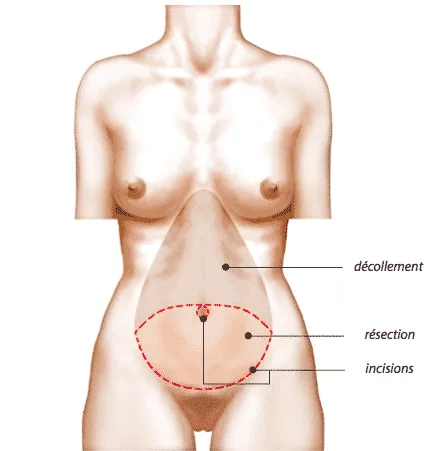
In Practice
A pre-operative abdominal CT scan may be requested to assess for potential hernias.
Before surgery, patients must obtain an abdominal compression garment to wear post-operatively.
The procedure is usually performed under general anesthesia, although spinal (epidural) anesthesia is also an option. A pre-anesthetic consultation is mandatory at least 48 hours before the procedure.
- Mini-abdominoplasty may be performed as an outpatient procedure.
- Full abdominoplasty typically requires 2 to 4 days of hospitalization.
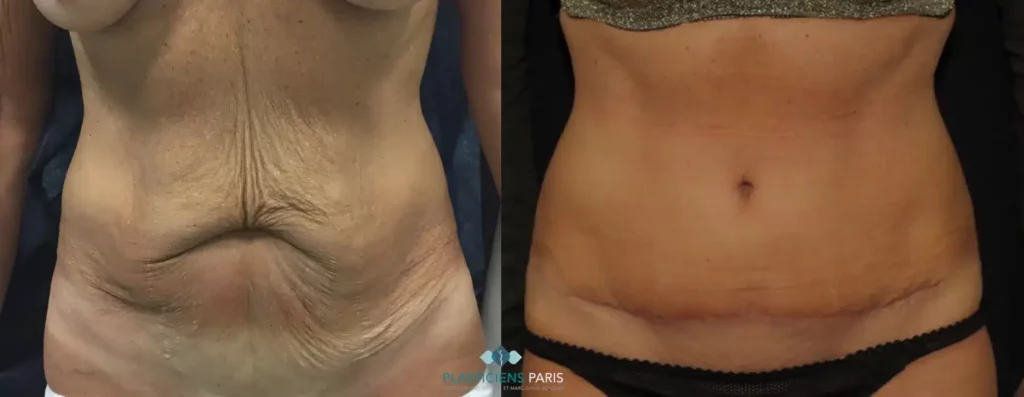
You can view before-and-after photos of abdominoplasty results on our dedicated page.
Questions & Answers About Abdominoplasty
Is abdominoplasty painful?
- If the abdominal muscles are not involved, the discomfort is comparable to liposuction and manageable with standard painkillers.
- If muscle tightening is performed (diastasis recti repair), the pain is more intense and requires stronger medications like morphine-based analgesics. This pain usually subsides after 15 days.
What are the possible complications of a tummy tuck?
- Mini-abdominoplasty is a lighter procedure with rare complications.
- Full abdominoplasty requires careful monitoring. The most serious risk is venous thromboembolism (phlebitis or pulmonary embolism), which is prevented through early mobilization, compression stockings, and 10 days of anticoagulant (heparin) injections.
- Other risks include
- Hematoma: may require surgical drainage if it occurs within the first 48 hours.
- Lymphatic effusion: occurs in ~10% of cases. If significant, it can be drained (painless procedure).
Temporary numbness: especially below the navel. Sensation generally returns within a year.
What post-operative care is required?
- Daily or every other day dressing changes by a nurse.
- Subcutaneous heparin injections for 10 days.
- Two blood tests to monitor hemoglobin and platelet levels during recovery.
Can abdominoplasty be reimbursed by French Social Security?
Yes, but only in very specific situations:
- The abdominal skin must hang over the pubic area while standing (mandatory criterion).
- Significant recent weight loss is another key factor.
- Note: Having had three children or a C-section does not automatically qualify for reimbursement.
How much does a tummy tuck cost?
In the field of cosmetic surgery, prices range from €6,000 to €9,000 for a mini tummy tuck or full abdominoplasty.
If social security coverage is available after approval by the medical advisor, we charge additional fees of €3,000 to €4,500, which may be covered by your supplementary health insurance.