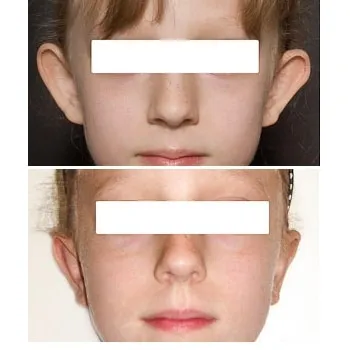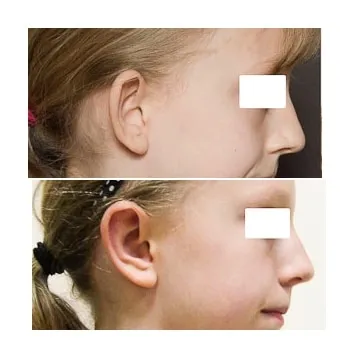

The Key Points
- Otoplasty is performed on an outpatient basis: patients arrive in the morning and return home the same day.
- The procedure is covered by French health insurance in cases of significant psychological distress.
- Our fees for ear surgery range from €2,000 to €3,500 depending on the complexity of the case.
What Is Otoplasty?
Protruding ears are typically caused by one or both of the following anatomical issues:
- Excess cartilage in the central portion of the ear (conchal hypertrophy)
- Lack of natural folds in the upper part of the ear (poorly defined antihelical fold)
The goal of otoplasty is to correct these deformities by reshaping the cartilage to restore a more natural appearance.
The incision is made behind the ear, leaving no visible scars. In cases of excess conchal cartilage, a portion is removed and the remaining structure is secured deeper with sutures. If the antihelical fold is underdeveloped, permanent stitches are used to recreate it.
How the Procedure Is Performed
Otoplasty is most often carried out under neuroleptanalgesia (local anesthesia with intravenous sedation), although general anesthesia can be used if preferred. A pre-anesthesia consultation is required at least 48 hours before the operation.
The surgery is done on an outpatient basis. You can return home a few hours after the procedure, accompanied by a friend or family member.
Post-operative effects are generally mild but include swelling of the ears during the first 5 days. Since the ear is delicate and prone to infection, daily nursing care is recommended for 10 days. Stitches are removed at the end of this period.
Patients must wear a protective headband continuously for one month following the surgery to protect the ears, particularly during sleep. Contact sports or any activity involving potential impact to the ears should be avoided for at least 3 months.
Our Specific Approach to Otoplasty
- Over 90% of our ear surgeries are performed as outpatient procedures, even for young children, thanks to effective local anesthesia.
- We use a minimally invasive, fast technique based on non-absorbable sutures to reshape the ear.
This approach avoids cartilage removal, significantly reducing the risk of hematoma, skin necrosis, and other complications.
Frequently Asked Questions
Is otoplasty covered by French health insurance?
Yes, if the protruding ears cause significant psychological distress, the procedure may be covered.
At what age can otoplasty be performed?
Otoplasty can be performed once the ear has reached adult size, generally around 7 to 8 years old. However, it’s crucial that the child expresses a desire for the surgery. We do not recommend forcing a child into the procedure.
What are the risks or complications?
While rare, potential complications include:
- Infection (must be strictly prevented with daily care and sterile conditions)
- Hematoma within 48 hours of surgery (may require drainage)
- Temporary loss of sensation in the ears (common for up to 6 months)
- Hypertrophic or keloid scars (in predisposed individuals)
- Suture extrusion through the skin (may occur within 2 years and need correction)
What does ear surgery cost?
If covered by social security, our fees range from €2,000 to €3,500, often reimbursable by complementary health insurance.
In cases not covered (purely aesthetic), the full cost—including VAT and hospitalization—is between €5,000 and €6,000, depending on the case.