

Also known as lipoaspiration, liposuction is the most commonly performed cosmetic surgery procedure worldwide. It is a safe and effective technique for permanently eliminating localized or diffuse fat deposits, helping patients achieve a slimmer, more contoured silhouette.
Principles of Liposuction

Liposuction removes excess fat through a minimally invasive technique using multiple small incisions of 3 to 4 mm. A solution containing water and adrenaline is injected into the targeted fat to minimize bleeding. Fine, multi-holed cannulas connected to a closed suction system are then used to aspirate the fat evenly, promoting optimal skin retraction.
Commonly treated areas include:
- Chin
- Arms
- Abdomen
- Hips
- Thighs
- Knees
- Calves and ankles
While non-invasive alternatives like ultrasound, laser, or cryolipolysis exist, they do not typically offer results as dramatic as surgical liposuction. Patients can expect to lose one to two pant sizes after the procedure.
Liposuction in Practice
The procedure can be performed under different types of anesthesia, depending on the number and location of areas treated:
- Local anesthesia for one small area (“gentle liposuction”)
- Neuroleptanalgesia (deep local anesthesia with IV sedatives)
- General anesthesia for multiple areas
Liposuction is often done on an outpatient basis (admission at 8:00 AM, discharge at 4:00 PM), but an overnight stay may be required in some cases. A pre-anesthetic consultation is mandatory at least 48 hours before the procedure.
Post-operative care includes wearing a compression garment (such as a Medical Z girdle) for 1 to 2 months. Bruising typically resolves in about three weeks, and final results are visible by the third postoperative month.
Specifics of Our Liposuction Technique
Sports and lymphatic massage (palpate and roll or LPG) are recommended starting on the fourth day post-op
Over 80% of our liposuctions are performed on an outpatient basis
We use fine 3 to 4 mm cannulas to ensure smooth, uniform results
Questions and Answers About Liposuction
What are the post-liposuction care steps?
Wear a compression garment continuously for one to two months to support skin retraction. Shower with the garment on for the first two days. Once swelling decreases, remove it for washing and cleanse your skin with a gentle soap. You may apply a caffeine-based cream to aid drainage. From day four, begin 4–6 sessions of lymphatic massage with a physiotherapist.
How long do bruises last?
Bruising generally lasts 2–3 weeks and can be minimized with Arnica homeopathic granules.
When will I see the results?
Initially, swelling caused by the injected water may obscure results. This subsides over two weeks as the water is eliminated through urination. Definitive results are typically visible by the second month.
Can liposuction replace a diet?
No. Liposuction reshapes specific areas but does not replace the benefits of a healthy lifestyle. It may, however, jumpstart further weight loss when previous diet efforts have plateaued.
How much does liposuction cost?
Costs vary by the number of areas treated:
- Starting at €3,500 for one small area under local anesthesia
- Up to €8,500 for five or more areas
For more information, consult our detailed pricing page.
Photos avant / après une liposuccion
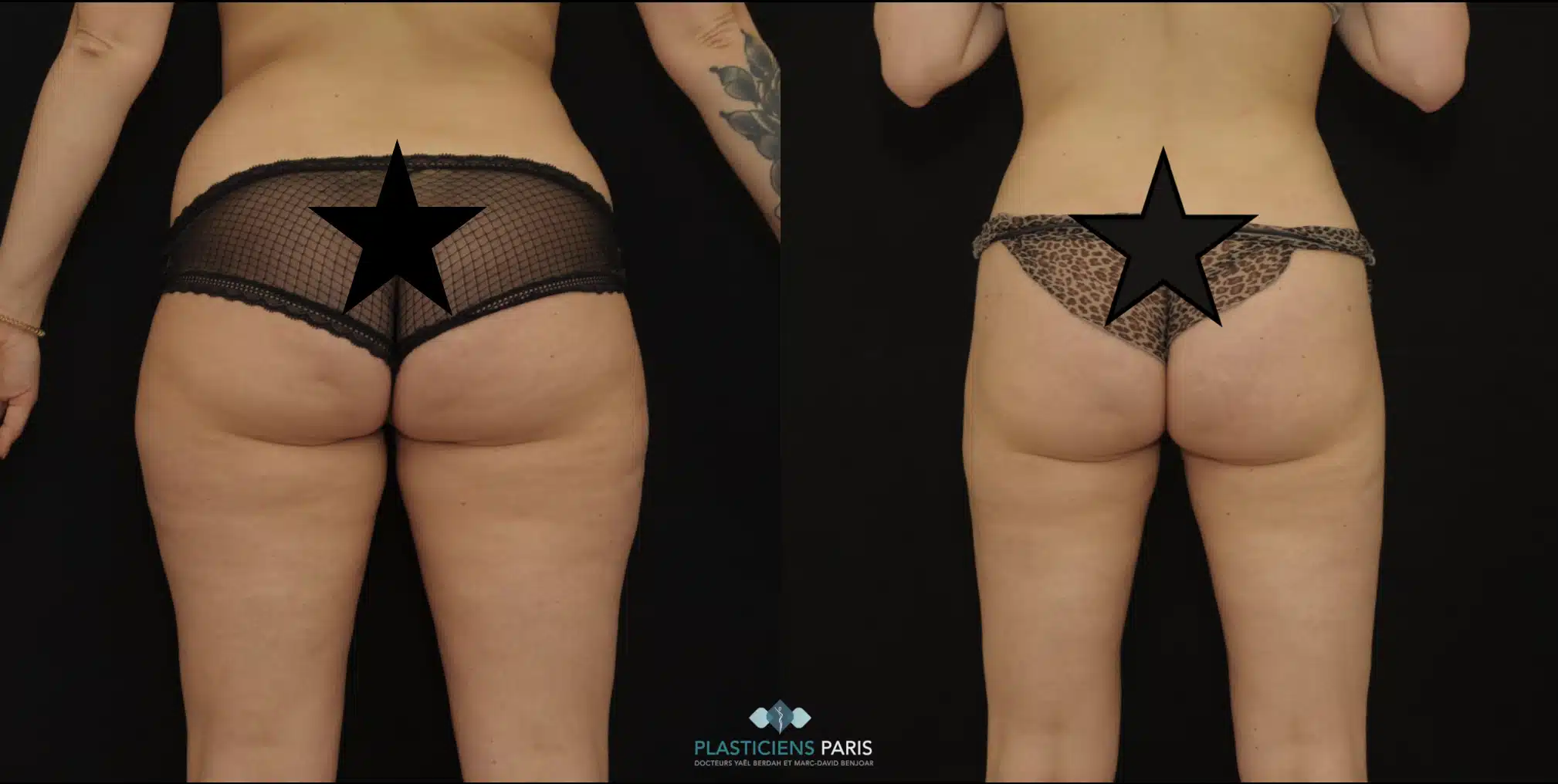
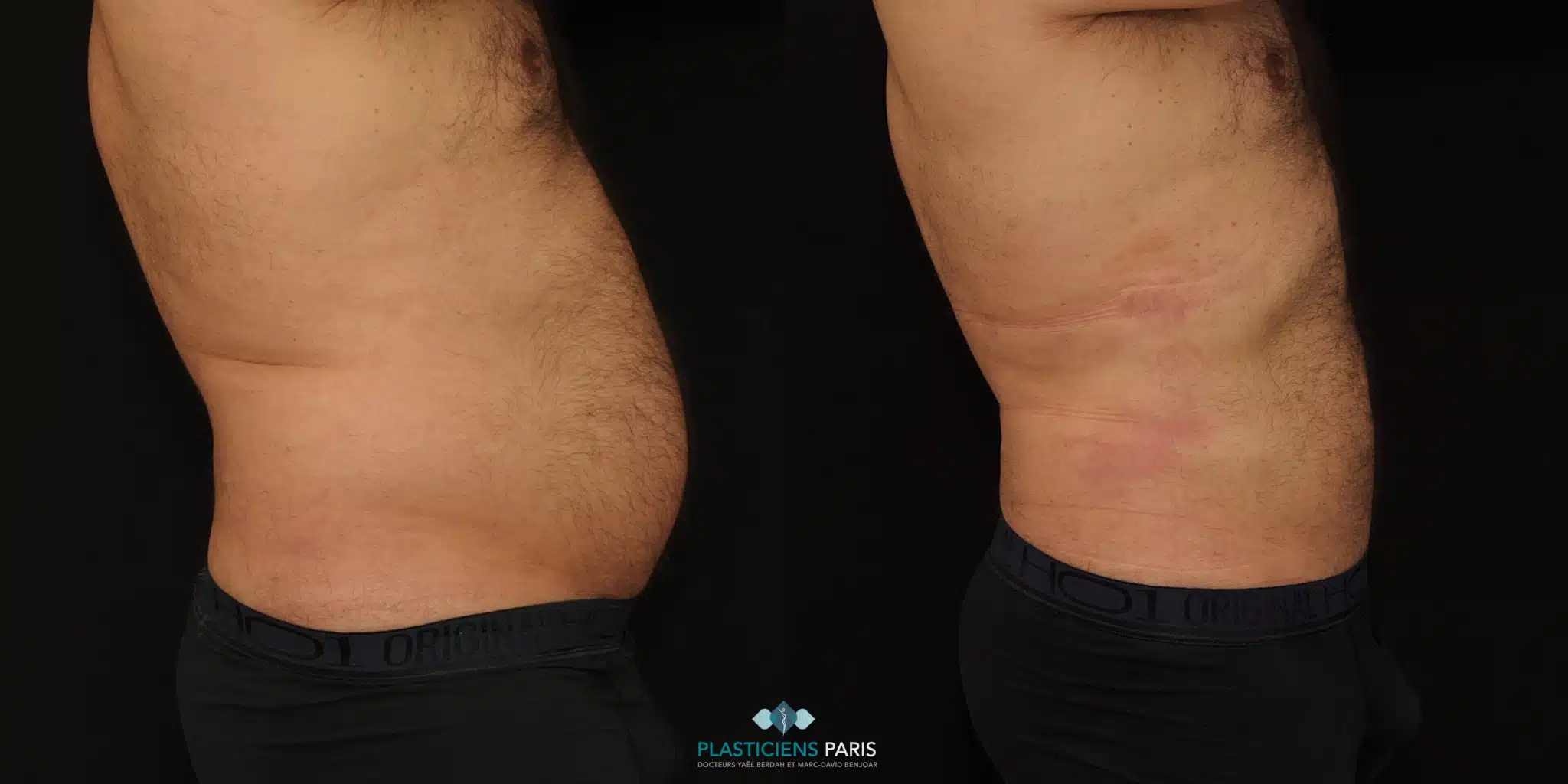
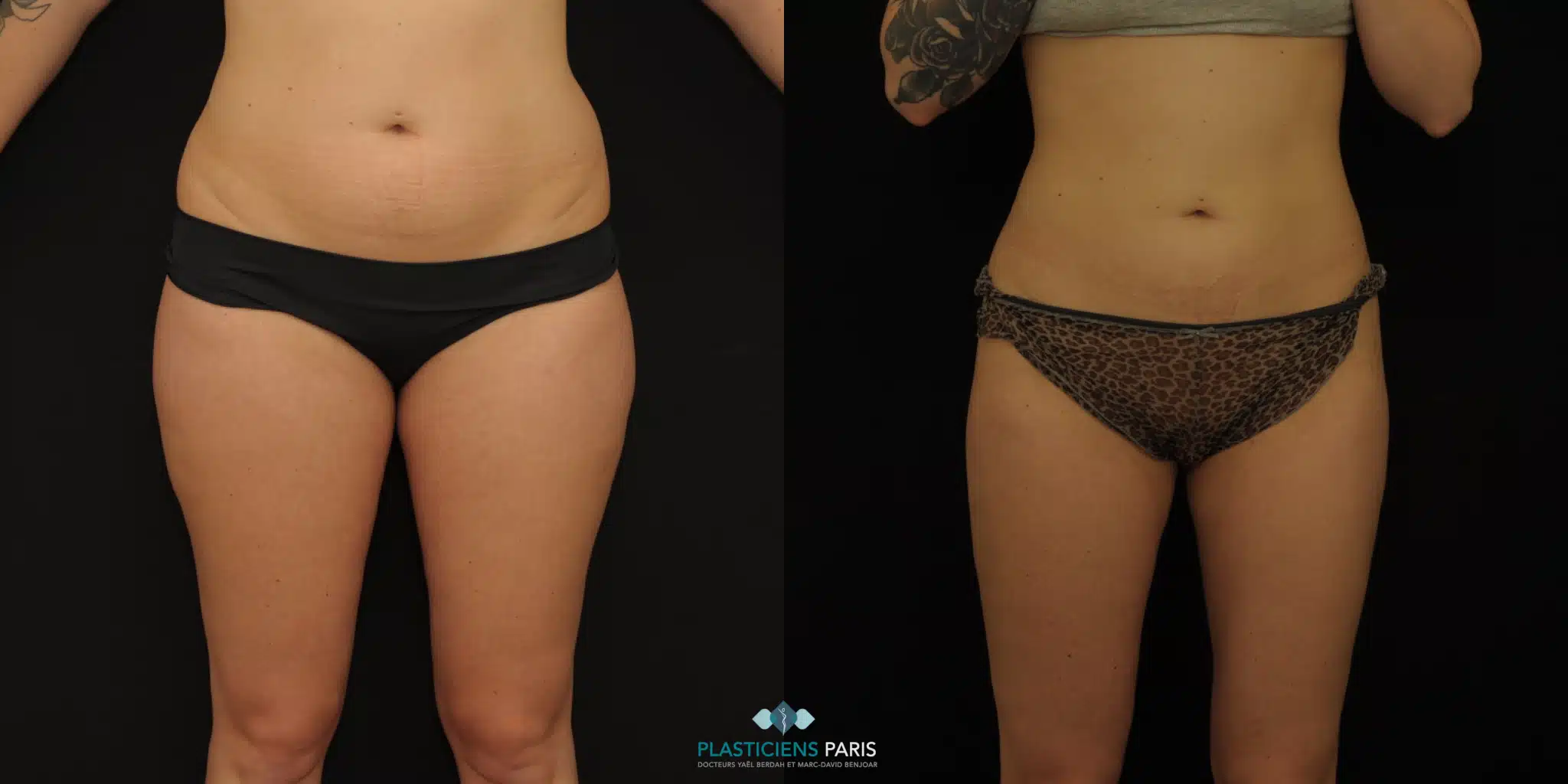
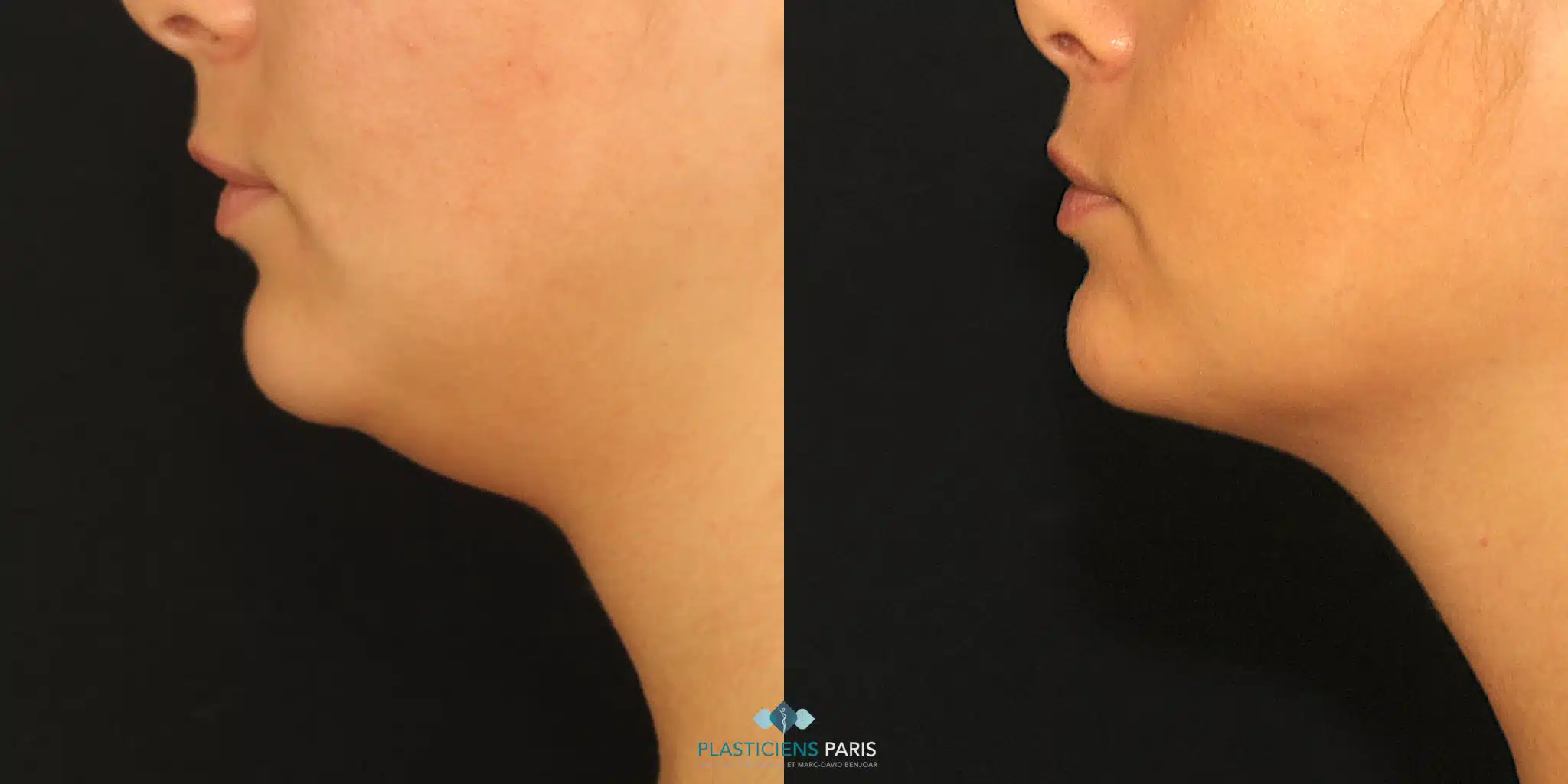
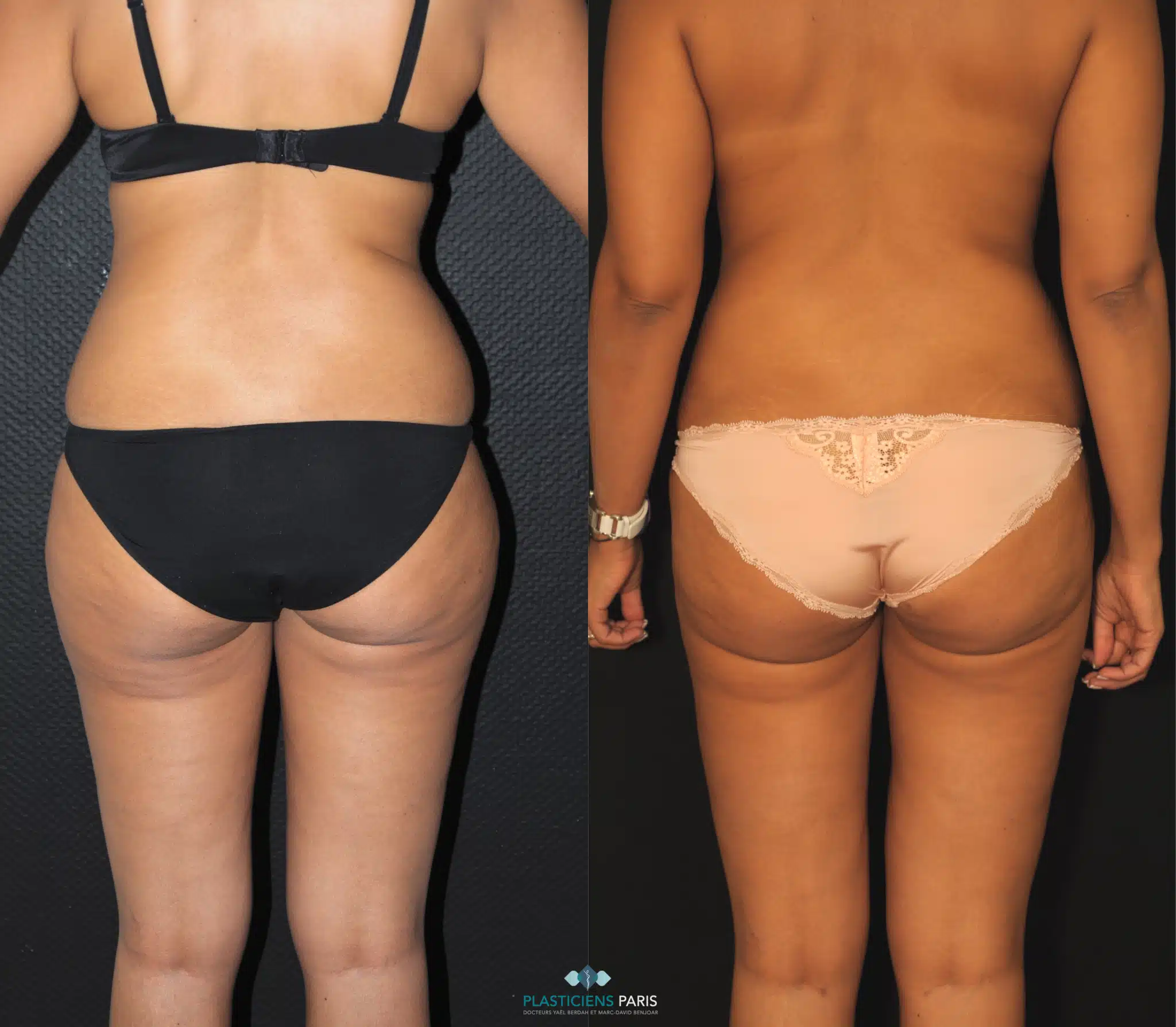
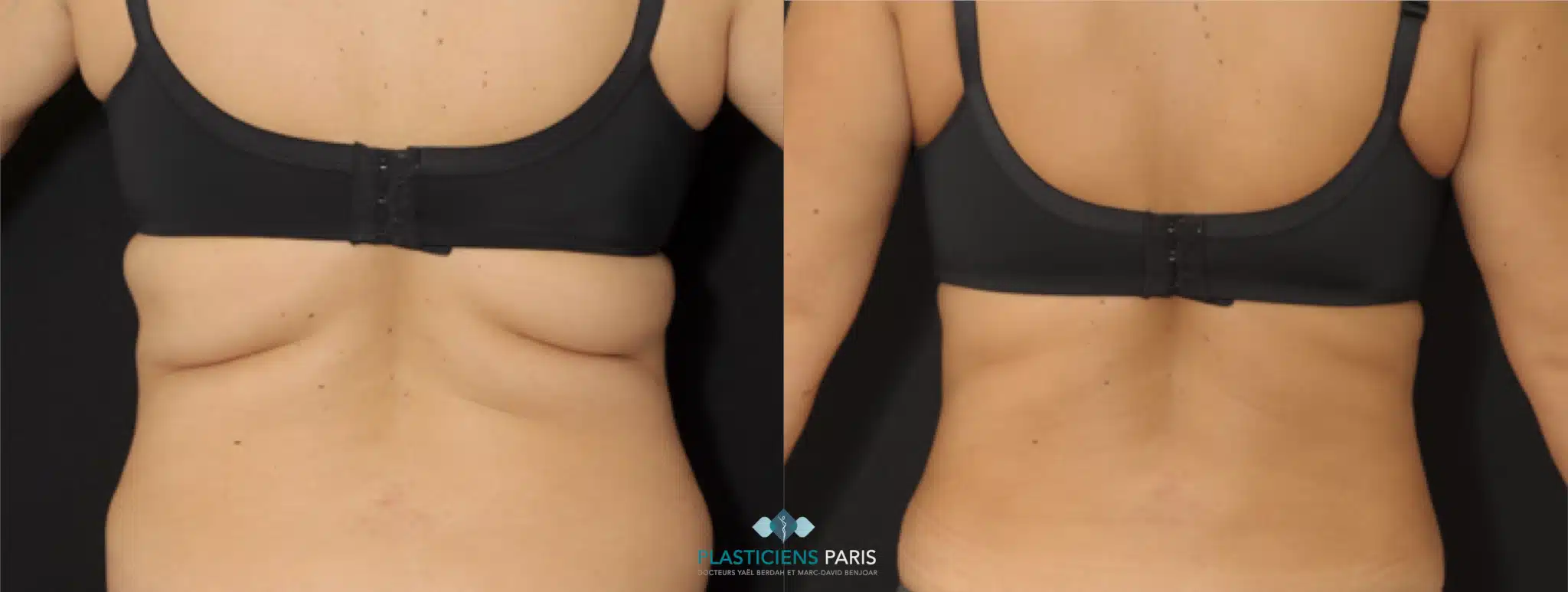
Découvrez les résultats avant/après des liposuccions du ventre, des cuisses, du cou, du dos et des hanches, réalisées à Paris par les Drs Benjoar et Berdah.